
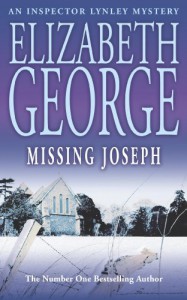
 Elizabeth George is one of the premier “English-mystery” writers. As it happens, she lives and writes in California, but she apparently studied in England and does locale-specific research before each new novel. She’s very good at capturing the local dialect and geographic description, but, my goodness, I suspect she must have a peculiar love life because the characters of the two novels I’ve read have such bizarre, intertwined lives.
Her main character is Inspector Thomas Lynley, a certifiable Earl, who is in love with Lady Helen, who at one time had an affair with Lynley’s best friend and colleague, forensic pathologist Simon St. James, who is married to Deborah, who had an earlier affair with Lynley and lost his baby. Deborah is quite a few years younger than St. James and was apparently his ward — it’s not completely spelled out in this one, but my wife, who is a great fan of George assures me that reading them in order will straighten things out. Whew!
Lynley’s acerbic partner is Sergeant Barbara Havers. I think I like her character the best because she is so good at putting Lynley in his place. Anyway, in this novel, the local vicar, Mr. Sage, has been killed by accidentally ingesting water hemlock (a nasty, poisonous plant) inadvertently provided to him for dinner by Mrs. Juliet Spence, who is in love with the local constable, Colin Shepherd.
Shepherd’s investigation clears Mrs. Spence, whose daughter Maggie is sleeping with Nick, who wants to be a vet. In the meantime, Polly, daughter of the local 20 stone (English measure of weight) witch, is in love with Colin (who later rapes her), but she in turn is being lusted after by Brendon, who was forced to marry—after he got her pregnant— Rebecca, whom he utterly loathes but was reluctant to retreat from because he is a lawyer in the firm owned by her father. Whew, again!
In any case, Lynley becomes involved because St. James and Deborah have gone on holiday to this little town, and St. James realizes that something is fishy about the death of the vicar. The inquest and coroner had ruled the death an accident, following a rather clumsy investigation by Colin who, as I mentioned, is having an affair with the lady who administered the poisonous herbs mistakenly thinking they were parsnips. Apparently, New Scotland Yard CID inspectors can run around investigating closed cases in other jurisdictions willy-nilly.
Actually, this is a riveting novel with very interesting characters, but I do worry about Ms. George’s love life.


